



Energy security is no longer limited to the supply of hydrocarbons.
It is now framed within a strategic triptych:
1. Massive electrification of end uses (mobility, industry, buildings)
2. Rapid expansion of digital infrastructure (data centers, AI, sovereign cloud)
3. Growing dependence on critical and strategic minerals
The rise of electric vehicles, smart grids, and data centers is profoundly reshaping the geopolitics of energy. Supply chains for copper, lithium, nickel, cobalt, and rare earths are becoming key issues of sovereignty.
TOPICS

SMART GRID

ELECTRICITY

ARTIFICIAL INTELLIGENCE

BIG DATA

CRITICAL
MINERALS

ELECTRICITY STORAGE

CYBERSECURITY

TECHNOLOGICAL INNOVATION

ENERGY TRANSITION
ELECTRIC
VEHICLES


Smart Grids and Micro-grids represent significant advances in electricity management and distribution. Smart Grids use digital technologies to monitor and manage electricity transport, enabling more efficient and responsive distribution. Micro-grids, on the other hand…
Optimizing energy efficiency is crucial to meet the rising demand while limiting environmental impact. This includes improving cooling technologies in data centers, using more efficient processors for AI computations, and adopting energy management practices in…
With the advent of modern technologies, energy demand has significantly increased. Sectors such as artificial intelligence (AI), data centers, and e-commerce consume vast amounts of electricity. AI, in particular, requires enormous computing power, which increases the…
Integrating renewable energy is a key response to increasing energy demand. Green technologies such as solar, wind, and hydroelectric power offer sustainable alternatives to traditional energy sources. Innovations in energy storage, like high-capacity batteries, help…
AI and Big Data play a crucial role in optimizing energy systems. Through predictive analytics and intelligent data management, it is possible to forecast demand peaks, optimize electricity production and distribution, and detect inefficiencies in the network. This not only…
The risks of blackouts (power outages) increase with the complexity and interdependence of modern energy systems. Cyberattacks represent a growing threat to the security of electrical networks. A blackout can have devastating consequences on the economy, public safety…
The transition to electric mobility is a major factor in the increasing demand for electricity. Electric vehicles (EVs) require an extensive and reliable charging infrastructure. This transition also necessitates innovations in energy storage and distribution to meet EV needs…
Small Modular Reactors (SMRs) offer a potential solution to the growing energy demand while reducing carbon emissions. SMRs are small, modular nuclear reactors that can be deployed more quickly and at a lower cost than traditional reactors. They are designed to be…
ES – 2012 – GENEVA -SWITZERLAND
4>5 April 2012 -Geneva -Switzerland
ES’2012
International Congress on Energy Security
International Congress Center, Geneva (CICG), 4 – 5 April 2012
1st Edition of the Congress on Energy Security:
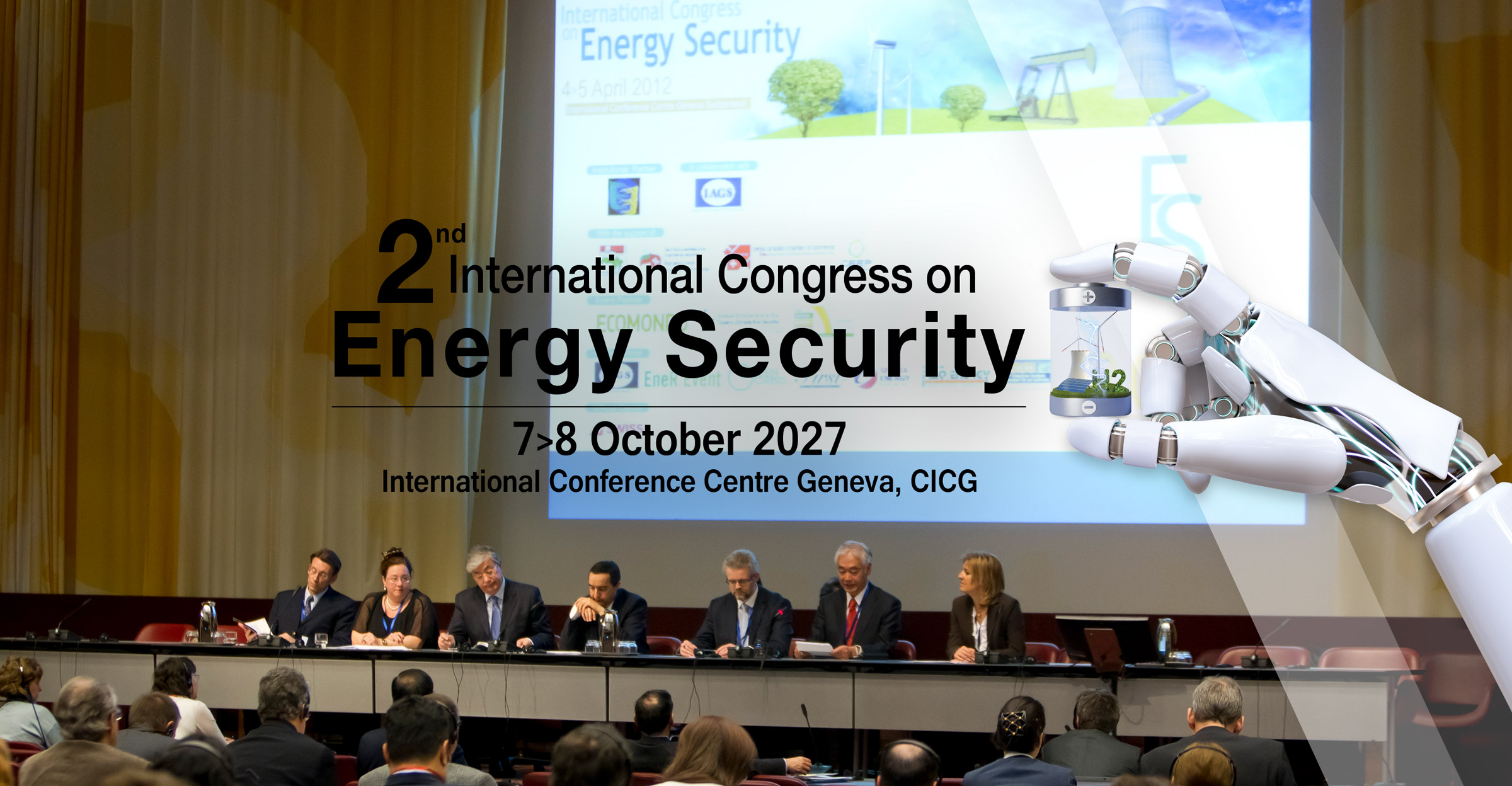
This high-level event brought together nearly 250 international experts, decision-makers, and energy sector professionals over two days. They discussed key strategic topics such as the geopolitics of energy, oil and gas resources, the future of nuclear energy, climate change, and renewable energy. Technological and scientific innovations were also highlighted due to their role in shaping a sustainable global energy security model.
The congress provided an opportunity to offer a new vision for the future of energy by exploring innovative and sustainable solutions. With global developments, pressure on energy demand is steadily increasing. The themes addressed at the congress focused on energy security in its broadest sense, with a particular emphasis on energy supply, which remains a major concern for the years ahead. Millions of people worldwide still lack access to energy.
The key question the international experts sought to address was how to ensure sustainable global economic growth while securing energy for this millennium. Throughout the congress, participants exchanged viewpoints that were both rich and diverse, fostering a comprehensive discussion on the future of energy security.
More than 250 delegates from 25 countries
Official opening ceremony chaired by Mr. Tokayev- Director General of ONUG
With the support of

Event Partner

Media Partner
